
Ascot Betting Tips: Data-Driven Picks & Strategies
 Available in US
Data-driven picks. No hype. Just edge.
Start Reading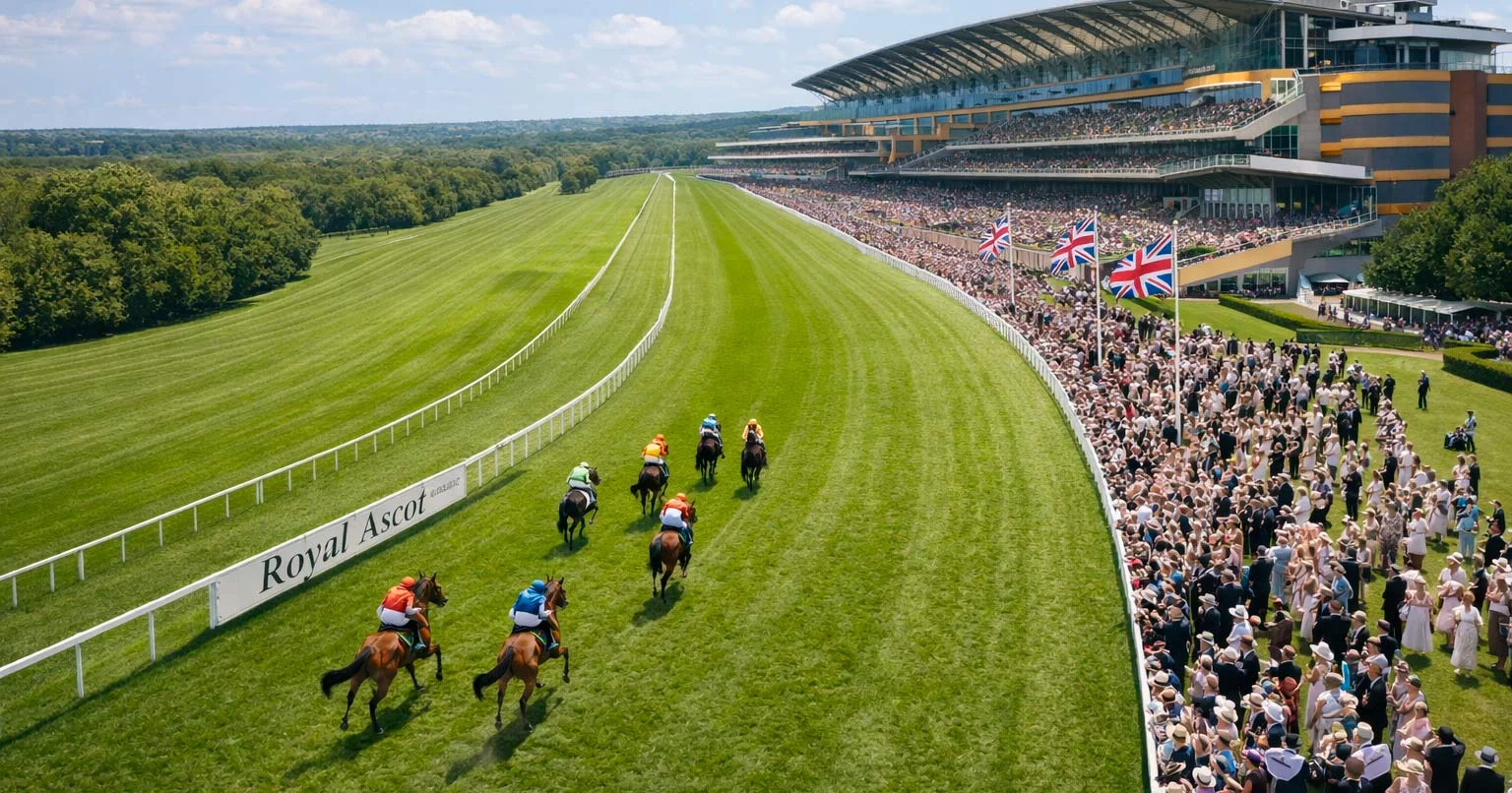
Ascot Betting Tips: A Data-Driven Approach to Britain's Premier Racecourse
Ascot betting tips are only as valuable as the data behind them. This guide takes a different approach to covering Britain's most prestigious flat racing venue. Rather than relying on hunches or recycled conventional wisdom, every recommendation here draws from verifiable statistics, official sources, and documented performance trends.
Ascot Racecourse occupies a unique position in British horse racing. The venue combines centuries of tradition with modern infrastructure following its comprehensive 2005 redevelopment, creating a track that rewards both class and tactical acuity. For bettors, this duality presents specific challenges. The straight mile course and the round course demand different interpretations of form. Draw advantages that plague tracks like Chester and Beverley have been engineered away to a significant degree. Trainer dominance patterns emerge clearly when examined across multiple seasons.
The data-driven edge for Ascot betting begins with understanding what separates this track from others in the British racing calendar. Prize money at the venue has reached record levels, attracting the strongest fields across all race types. The Royal Meeting alone distributes more prize money than most tracks offer across an entire season. This concentration of quality means that favourites behave differently here than at regional meetings, handicaps produce distinct strike rate patterns, and certain trainer-jockey combinations deliver measurable value.
What follows is a comprehensive framework for approaching Ascot races throughout the season. Each section addresses a specific aspect of successful betting at this venue, from reading form symbols to calculating each-way value in large-field handicaps. The statistics referenced come from official sources including the British Horseracing Authority, the Horserace Betting Levy Board, and Ascot Racecourse's own published financial data. Whether you focus on the flagship Royal Meeting in June or the season-ending British Champions Day in October, the principles remain consistent.
Quick-Start Numbers for Ascot Betting
- Ascot's 2005 redevelopment substantially reduced draw bias, making stall position less critical than at tracks like Chester or Beverley, though sprint races and large-field handicaps still show conditional effects based on going.
- Aidan O'Brien and Ryan Moore dominate with 91 and 85 Royal Ascot wins respectively. Their partnership commands automatic respect in Group races and juvenile events.
- Handicap favourites win 39 percent of races versus 26 percent in non-handicap events. Each-way betting on 8/1 to 20/1 selections captures place value in competitive fields.
- Prize money reached a record £17.75 million in 2025, with the King George alone worth £1.5 million. These sums attract the strongest international fields, making form analysis more reliable than at lesser meetings.
- Monitor going conditions throughout meetings. June typically delivers good to firm ground, October varies widely, and surface changes shift bias patterns and form reliability.
Understanding Ascot Racecourse
Ascot's financial health reflects its status in British racing. The racecourse posted a record turnover of £113.1 million in 2024, a figure that underscores the commercial scale of the operation. This financial strength translates directly into competitive racing through industry-leading prize funds that attract top-tier horses from domestic and international connections.
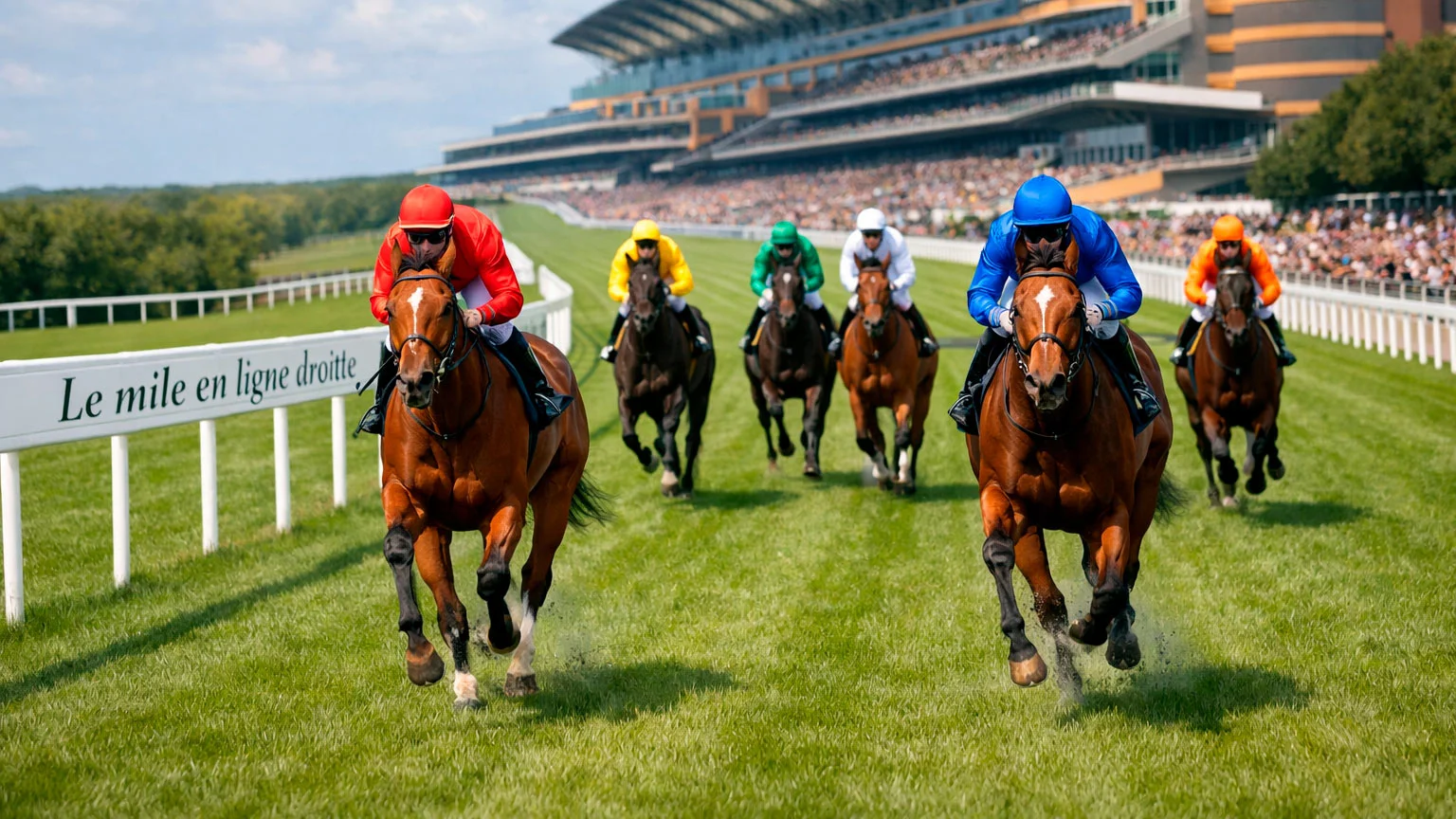
The physical layout of Ascot requires specific understanding before interpreting form. The course operates two distinct configurations. The straight course accommodates races up to one mile, running from the starting stalls directly towards the winning post with no turns. The round course handles longer distances, curving right-handed with a sweeping bend that tests a horse's ability to travel while maintaining balance. These two tracks produce different racing dynamics despite sharing the same finishing straight.
On the straight mile, the track rises for the first half before levelling out and presenting a slight descent in the final two furlongs. Horses need the stamina to climb initially and the speed to quicken on the downhill finish. The round course introduces additional complexity with its cambered bend, where outside draws must cover extra ground unless jockeys take aggressive early positions. Both configurations feature a famously stiff uphill finish, the climb to the winning post separating horses that merely gallop fast from those with genuine competitive spirit.
Royal Ascot 2025 drew 286,541 visitors across its five days, a 4.8 percent increase from the previous year. This attendance figure matters to bettors for practical reasons. Larger crowds generate deeper betting pools, particularly significant for Tote and World Pool participants. The atmosphere also intensifies pressure on both horses and jockeys, with some performers handling the electric environment better than others. Course form at Ascot often proves more reliable than general class ratings precisely because the venue tests attributes beyond raw ability.
The 2005 redevelopment transformed Ascot's racing surface and infrastructure. The drainage system, track geometry, and going management technology all received comprehensive upgrades. For bettors analysing historical form, this date matters. Results from before the redevelopment reflect a fundamentally different racing surface. Trainers who dominated the old Ascot may have different records at the modernised venue. Draw biases that once influenced results have been substantially reduced, though not entirely eliminated, by the engineering improvements.
Key Races at Ascot
The total prize fund at Ascot reached a record £17.75 million in 2025, distributed across meetings from spring through autumn. This figure positions Ascot as the highest-paying flat racing venue in Britain, with financial incentives that draw the strongest possible fields to its flagship events.
Royal Ascot accounts for roughly £10 million of this total, spread across 35 races over five days in June. The meeting features eight Group 1 races, each carrying prize money of at least £650,000. The Gold Cup, run on Thursday afternoon, represents the staying championship of Europe with a distance of two miles and four furlongs. The Diamond Jubilee Stakes on Saturday serves as the sprint championship, testing elite six-furlong horses at weight-for-age. Between these marquee events, the Royal Meeting also stages some of the most competitive handicaps in the British calendar.
The King George VI and Queen Elizabeth Stakes carries a £1.5 million prize fund, making it the most valuable single race in Ascot's calendar. Staged in late July, this middle-distance championship brings together Derby winners, older horses, and international challengers over a mile and a half on the round course. The race frequently determines the European Horse of the Year title, attracting runners from Ireland, France, and occasionally Japan or America. The timing creates an intriguing formline intersection, with three-year-olds fresh from Classic campaigns meeting proven older performers.
British Champions Day in October closes the flat season with a Group 1-heavy card. The Champion Stakes provides the main event, contested over a mile and a quarter, while the sprint, stayers, and fillies' championships complete a definitive season finale. Prize money across the card approaches £4 million, with each Group 1 contest offering at least £750,000 to the winner. The meeting's late-season positioning means ground conditions vary significantly between years, ranging from good to soft as autumn weather arrives.
Heritage handicaps deserve particular attention from bettors seeking value. The Royal Hunt Cup and Wokingham Stakes during Royal Ascot regularly attract fields of twenty or more runners, creating each-way opportunities that Group races rarely provide. The Buckingham Palace Stakes and Golden Gates Stakes offer similar dynamics. These big-field handicaps often produce double-figure prices, with the market finding it difficult to separate closely matched horses carrying similarly weighted ratings.
The Ascot Racing Calendar
The Ascot season follows a distinct rhythm that informs betting strategy throughout the year. The pattern begins in late April with the Dubai Duty Free Spring Trials, featuring trial races for the Classics and early-season clues about the emerging three-year-old generation. These meetings attract smaller crowds but offer sharp bettors the first glimpses of horses being aimed at Royal Ascot two months later.
Royal Ascot dominates the June calendar, running from Tuesday to Saturday during the third week of the month. The meeting's timing coincides with the flat season's peak form, when horses have shaken off any winter rustiness and trainers have identified their best targets. The five-day structure allows punters to observe track conditions, note which running styles prosper, and refine selections as the week progresses. Saturday's card, featuring the Diamond Jubilee and Wokingham, traditionally draws the largest crowds and deepest betting pools.
The King George in late July follows six weeks after Royal Ascot, providing a midsummer championship that often reshapes middle-distance rankings. The race's position allows Royal Ascot performers to recover and prep, while Derby and Oaks horses have sufficient time to step up in trip or take on older competition. Ante-post markets for the King George typically form immediately after Epsom, with significant price movements through June as Royal Ascot form clarifies the picture.
British Champions Day arrives in mid-October, closing the flat turf season with finality. Ground conditions by this stage reflect the autumn's weather pattern, with softer surfaces favouring different types than the firmer summer ground. The meeting's championship structure creates natural betting narratives, as seasons of form are distilled into single decisive races. For punters, Champions Day offers the final opportunity to exploit any knowledge edge accumulated across the summer months.
Betting Fundamentals
Understanding bet types forms the foundation of any Ascot betting strategy. The three core options are win bets, place bets, and each-way combinations. A win bet pays only if your selection finishes first. A place bet pays if your selection finishes within a specified number of positions, typically the first three or four depending on field size. Each-way combines both, splitting your stake between win and place at different odds.
British horse racing uses fractional odds as standard, though decimal formats are available at most bookmakers. A horse priced at 5/1 returns £5 profit for every £1 staked if successful, plus the original stake. Converting to decimal, this equals 6.00. A price of 11/4 represents £2.75 profit per £1 staked, or 3.75 in decimal terms. Understanding both formats proves useful when comparing prices across different platforms, as some operators default to decimal display.
Place terms vary by race type and field size. In handicaps with sixteen or more runners, standard terms offer one-quarter the odds for places first to fourth. Fields between eight and fifteen runners typically pay one-quarter odds for places first to third. Non-handicap races and smaller fields may pay one-fifth odds for fewer places. These terms significantly impact expected value calculations for each-way bets, making them essential knowledge rather than fine print.
The starting price represents the odds available at the moment the race begins, determined by on-course bookmakers. Most online operators offer best odds guaranteed, meaning they pay whichever is higher between the price you took and the eventual starting price. This feature reduces the penalty for betting early, though monitoring price movements still provides information about market confidence and potential steamer or drifter patterns.
Tote betting operates differently, pooling all stakes and distributing the fund among winning tickets after a deduction. For Ascot's major meetings, the World Pool aggregates international bets, creating larger pools that can offer value on overlooked selections.
Each-Way Betting Explained
Each-way betting splits your total stake into two equal parts. Half goes on your selection to win, half goes on your selection to place. If the horse wins, both bets pay out. If the horse places but does not win, only the place portion returns money. The place odds are typically one-quarter or one-fifth of the win odds, depending on the race conditions.
The mathematics favour each-way betting in specific situations. When favourites in British racing win approximately 30 to 35 percent of races, the remaining 65 to 70 percent features at least one non-favourite in the frame. In large-field handicaps at Ascot, where 20 or more runners compete, the favourite's win rate drops further while place opportunities multiply. Each-way betting captures this dynamic, allowing you to profit from horses that run well without needing them to triumph.
Consider a practical example. A horse priced at 10/1 in a 16-runner handicap with standard one-quarter odds for four places. A £10 each-way stake means £10 on the win at 10/1 and £10 on the place at 10/4. If the horse wins, you receive £110 profit from the win bet plus £35 from the place bet, totalling £145 return on a £20 stake. If the horse finishes second, third, or fourth, the win bet loses but the place bet returns £35, giving you £15 profit overall.
Enhanced place terms available during major meetings shift these calculations significantly. Some bookmakers offer four places at one-quarter odds on races with twelve runners, or five places on races that would normally pay only four. These promotions increase expected value on each-way bets, making longer-priced selections mathematically viable where standard terms would not support them. Comparing place terms across operators before major Ascot meetings can identify meaningful edges.
The break-even point for each-way betting depends on the place fraction and number of places paid. At standard one-quarter odds for four places, a horse roughly priced at 8/1 or longer begins to offer positive expected value each-way if its true chance of placing meets certain thresholds. Below this price, win-only betting typically provides better value unless the place terms are enhanced or the horse has a specific profile that suggests it will place more often than win.
Form Analysis for Ascot Races
Reading horse racing form requires understanding a symbolic language that compresses complex information into concise strings. The most recent runs appear first, reading left to right through a horse's history. A figure of 1 indicates a win, 2 a second place, and so forth down to 0 representing a finish outside the first nine. Letters carry specific meanings: F denotes a fall, U an unseated rider, P a pulled up, and dash marks separate seasons.
Course form at Ascot carries particular weight. The track's unique characteristics mean some horses handle its demands while others struggle despite strong records elsewhere. A horse showing 1312 at Ascot demonstrates proven ability at the venue. One showing 0054 at Ascot but 1121 at other tracks suggests a course-specific problem that warrants attention. The stiff uphill finish, the undulations on the straight course, and the cambered round course each test specific attributes.
Recent form versus longer-term patterns presents a judgment call. A horse returning from a break may show old form figures that predate its current preparation. Conversely, a horse in the midst of a busy campaign may have its most relevant form in the last three runs rather than earlier season performances. For Ascot, where fields often include horses specifically prepared for the meeting, the fitness and freshness of recent outings matters considerably.
Official ratings provide a standardised measure of ability. The British Horseracing Authority reported a 3.5 percent increase in flat horses rated 85 or higher during 2024, reaching 2,052 individuals. This rating level typically separates competitive handicappers from horses struggling to make their mark. At Ascot, where even the lowest-grade races attract reasonable quality, ratings below 80 suggest a horse may be out of its depth. Above 100, you enter the territory of stakes-class performers capable of Group race placement.
Distance and going preferences embedded in form require careful interpretation. A horse with strong form over a mile on good ground facing a mile-and-a-quarter test on soft presents multiple unknowns. The form figures show what happened, not necessarily what will happen under different conditions. At Ascot, where ground can change during a meeting and distances test the limits of some horses' stamina, these form adjustments become central to selection.
Weight carried relative to past performances also demands attention. A handicapper stepping up in grade carries less weight than in its usual company but faces stronger opposition. A horse dropping in class carries more weight but runs against weaker rivals. The British handicapping system attempts to equalise chances through weight, making the relationship between rating, weight, and competition level a core analytical challenge.
Trainer Statistics at Ascot
Trainer performance at Ascot reveals distinct patterns of dominance that inform betting decisions. Some yards consistently target the venue with their best horses, accumulating records that demonstrate both preparation methods and horse selection suited to the track's demands. Others perform below their overall strike rates, suggesting either different priorities or systematic challenges with Ascot's unique characteristics.
Aidan O'Brien has accumulated 91 victories at Royal Ascot, an all-time record that reflects Ballydoyle's sustained excellence at the meeting. His haul includes nine Gold Cup wins, ten Coventry Stakes victories, and nine St James's Palace Stakes successes. These figures matter beyond historical interest because they indicate where O'Brien concentrates his best ammunition. A first-time starter in the Coventry from Ballydoyle commands automatic respect; a moderate runner in a mid-card handicap merits less attention.
The domestic training ranks offer their own specialists. John and Thady Gosden's operation at Clarehaven Stables maintains an excellent Royal Ascot record, winning the 2025 meeting's leading trainer award with five victories. Their fillies in particular perform consistently at the venue, with Enable's historic King George wins demonstrating their ability to prepare horses for Ascot's biggest prizes. William Haggas, Clive Cox for sprinters, and Charlie Appleby representing Godolphin all maintain above-average strike rates at Ascot meetings.
The financial stakes at Ascot explain this trainer concentration. As Ascot CEO Felicity Barnard noted, the racecourse achieved "continued revenue growth in 2024, reaching record levels of more than £113.1m," a financial reality that translates into prize money that top trainers target specifically. This symbiotic relationship between commercial success and competitive quality means Ascot fields consistently feature horses from the sport's elite operations. When analysing strike rates, context matters—a trainer with 22 percent from 50 runners demonstrates repeatable success, while two wins from four runners may be noise.
Trainer-jockey combinations add another analytical layer. O'Brien relies primarily on Ryan Moore for his Ascot firepower. The Gosdens work regularly with Frankie Dettori and more recently Robert Havlin. These established partnerships mean jockey bookings carry information. When a leading trainer books a less-familiar jockey for an Ascot runner, the deviation raises questions about availability, owner relationships, or tactical plans that differ from standard operations.
Jockey Performance Records
Ryan Moore has ridden 85 winners at Royal Ascot, placing him second only to Lester Piggott's historic total of 116 in the all-time standings. Moore's association with Aidan O'Brien gives him access to exceptional horses, but his tactical intelligence and strength in a finish remain independent assets. The Moore-O'Brien partnership means any ride from this combination at Ascot starts with the weight of history behind it.
The rising generation of British jockeys brings different profiles to Ascot. William Buick combines the polished style developed through his Godolphin association with the hunger of a rider seeking to dominate his era. Tom Marquand has established himself as a reliable big-race performer capable of tactical versatility. Irish jockeys raiding Ascot add competitive texture, with Colin Keane, Seamie Heffernan, and Wayne Lordan appearing regularly at Royal Ascot with live ammunition from Irish yards.
Jockey statistics require contextual interpretation. Strike rates on limited runners mislead. Place rates alongside win rates paint a fuller picture, particularly relevant for each-way selections. Some jockeys ride notoriously aggressive early tactics that either dominate or collapse. Others prefer to stalk and pounce, which Ascot's configuration suits given the finishing climb. Matching riding style to race shape and draw position forms part of the selection process.
Draw Bias at Ascot
Draw bias refers to the statistical advantage or disadvantage conferred by specific starting stall positions. Chester provides the extreme example, where horses drawn in double-figure stalls at sprint distances face near-impossible tasks. Ascot's draw dynamics are considerably more nuanced following the 2005 redevelopment, which fundamentally altered the track's characteristics through engineering that reduced positional advantages and modern drainage that prevents the ground deterioration historically creating rail biases.
Sprint races over five and six furlongs on the straight course present the clearest remaining bias. In larger fields, high draws can struggle to cross to the preferred racing line without expending excessive energy. The camber slightly favours the stands rail in good-to-firm conditions, though this advantage reverses when ground softens. The key insight is that Ascot's draw bias is conditional on going rather than fixed.
Round course races introduce different considerations. The track bends right-handed, meaning high draws must cover extra ground unless jockeys commit to establishing position immediately. In smaller Group race fields, this issue rarely determines results. In big-field handicaps over round-course distances, the effect becomes more meaningful. For detailed draw analysis by race and distance, the dedicated cluster article covers methodology and data in greater depth.
Ground Conditions and Going
The British going scale runs from firm through good to firm, good, good to soft, soft, and finally heavy. Each gradation describes the moisture content and resulting surface characteristics of the turf. Firm ground plays fast with minimal give underfoot. Heavy ground demands stamina and tests the resolve of horses who prefer quicker surfaces. Between these extremes, the nuances matter significantly for form interpretation.
Ascot's June meetings typically feature good to firm or good ground, though British summer weather refuses to guarantee any specific conditions. Royal Ascot has occasionally been affected by significant rainfall, transforming expected surfaces and reshuffling form expectations. Punters must monitor forecasts and official going reports throughout the week, adjusting selections when conditions differ from initial expectations.
British Champions Day in October presents the widest going variance. The meeting has been run on everything from good to soft through to heavy, depending on the autumn's rainfall pattern. This variability means ante-post selections carry condition-related risk. A horse dominant on good ground may face completely different circumstances come race day.
Horse preferences for specific ground conditions appear in their form. Repeated strong performances on soft ground indicate a specialist. A horse showing its best form on good to firm while producing moderate efforts when softer suggests clear surface requirements. At Ascot, where ground can change during a single meeting, these preferences become selection filters. Betting on a known soft-ground specialist when the going is good to firm represents hope over evidence.
Betting Strategies for Ascot
Effective Ascot betting strategies differ by race type. Research indicates favourites win approximately 39 percent in handicap races and 26 percent in non-handicap events. While this may seem counterintuitive, handicap races typically feature smaller fields and more predictable weight adjustments, whereas non-handicap races often pit elite horses against each other where form advantages are harder to assess.
The scale of British racing supports systematic approaches. Alan Delmonte, Chief Executive of the Horserace Betting Levy Board, reported that the Levy yield reached almost £109 million for the twelve months to March 2025, the fourth successive year of increase. This financial indicator demonstrates the ongoing health of British racing betting markets, providing depth and liquidity that allows sophisticated strategies to be executed.
For Group races at Ascot, the strategy shifts toward identifying form standouts and determining whether the market has correctly priced their chance. The data-driven edge for Ascot betting involves building a view of true probability and comparing it systematically to market prices.
Handicap strategy centres on field dynamics. Large fields create chaos that benefits specific running styles. The key lies in identifying which profile matches the likely race shape, then selecting horses whose previous performances suggest they can execute that tactical approach.
Interactive Tool
Handicap Favourite Gap, and O'Brien's Other Wins
Calculate the exact gap between handicap and non-handicap favourite strike rates, and isolate how many of O'Brien's 91 wins came from races not individually named.
Percentage-Point Gap
-
-
Handicap
-
Non-Handicap
-
Relative Multiple
-
What this guide gives as two figures side by side: "Handicap favourites win 39 percent of races versus 26 percent in non-handicap events." The gap itself is never stated — it's 13 percentage points, meaning handicap favourites win 1.50x as often.
Wins From Other Races
-
-
Total Wins
-
Named Races Sum
-
Other Share
What this guide lists without summing: "91 victories at Royal Ascot... nine Gold Cup wins, ten Coventry Stakes victories, and nine St James's Palace Stakes successes." How many of the 91 came from races not named is never calculated — it's 63 wins (69.2%) spread across every other race at the meeting.

Value Betting Principles
Value betting means backing selections whose true probability of winning exceeds the probability implied by their odds. If a horse has a 25 percent genuine chance but is priced at 5/1 (implying 16.7 percent probability), backing it represents positive expected value. Over sufficient volume, betting positive expected value produces profit regardless of individual race outcomes.
Odds translate directly to implied probabilities. Fractional odds of 4/1 imply a 20 percent chance. Favourites priced at 1/4 or shorter win approximately 86 percent of British races, meaning their implied probability of roughly 80 percent actually understates their chance. This statistic illustrates where value is unlikely to exist.
The market for major Ascot races incorporates enormous amounts of information from professional operations, sophisticated punters, and bookmaker risk managers. Beating this market consistently requires either superior information, superior interpretation, or focus on angles that receive less attention.
Value often appears at longer prices where market attention fades. A horse priced at 25/1 receives less scrutiny than the 2/1 favourite. This asymmetry makes thorough analysis of each-way candidates potentially more rewarding than obsessive focus on market leaders. Recording bets and tracking performance reveals whether your estimates are calibrated correctly.
Handicap Race Strategy
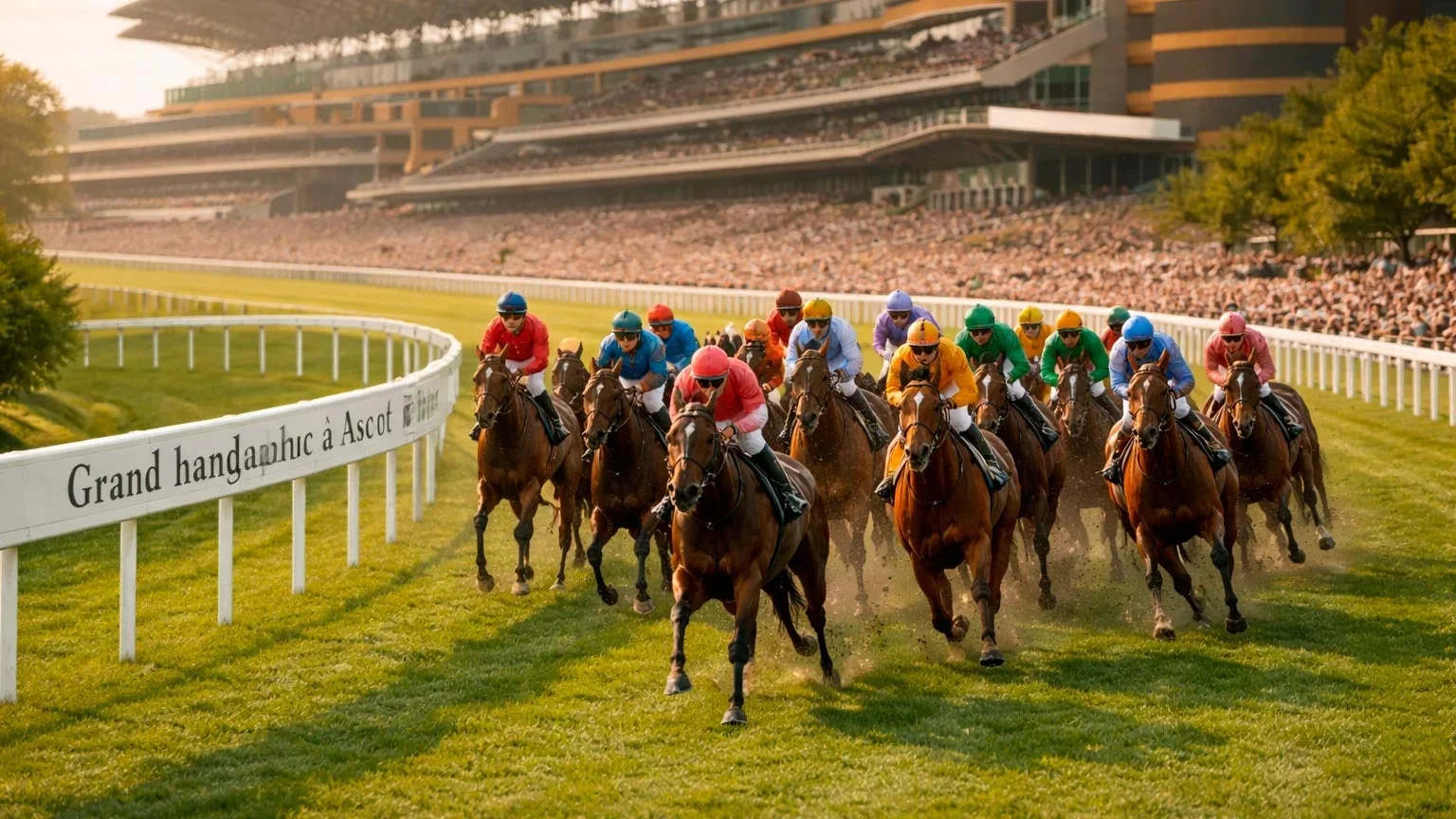
Ascot's heritage handicaps represent some of the most challenging and rewarding puzzles in British flat racing. The Royal Hunt Cup, Wokingham Stakes, and Britannia Stakes regularly feature fields exceeding twenty runners, creating market complexity that opens opportunities for prepared punters. These races resist simple analysis precisely because so many factors interact simultaneously.
Big-field handicaps reward specific approaches. First, the favourite-follow strategy loses appeal when fields grow large. While handicap favourites win more often than their non-handicap counterparts, a 39 percent strike rate still means losing more than six races in every ten. In large fields, the second, third, and fourth favourites often offer better value because they can place at generous each-way terms while the favourite absorbs market confidence.
Pace analysis becomes critical in competitive handicaps. When multiple horses want to lead, the early fractions quicken and the race falls apart for front-runners. When no horse wants the lead, slowly run races reward hold-up horses who can pounce late. Identifying the likely pace shape and selecting horses suited to that scenario provides edge that pure form analysis misses. The dedicated pace maps cluster article explores methodology for assessing likely race tempo.
Weight matters more in handicaps than anywhere else in racing. A horse risen ten pounds since its last win faces a substantially stiffer task than its form figures suggest. Conversely, a horse dropped to a competitive mark after returning from a break may be primed for a career-best effort. The handicapper's assessment represents expert opinion, but expert opinions can be wrong when horses improve or decline unpredictably.
Draw position gains importance as fields grow. In a twelve-runner race, draw disadvantages can be overcome through jockey skill. In a twenty-four runner handicap, horses drawn in unfavourable positions face genuine obstacles. Some trainer handicap specialists consistently place horses favourably in the weights—identifying trainers with strong Ascot handicap records adds a layer of analysis beyond the horse and its form.
Ante-Post Betting
Ante-post betting means placing wagers before final declarations, accepting the risk that your selection may not ultimately run. In exchange for this risk, ante-post markets typically offer longer prices than day-of-race equivalents. For Ascot's major meetings, ante-post markets form months in advance, with significant betting activity on Royal Ascot from early spring onwards.
The non-runner risk varies by race type and timing. A bet placed six months before Royal Ascot on a potential Gold Cup horse carries substantial uncertainty. Training setbacks, ownership changes, alternative target selection, and ground preference concerns can all prevent the horse from appearing. A bet placed a week before the meeting, after stable reports confirm fitness and intentions, carries lower risk but typically offers shorter prices.
Value windows exist in ante-post markets. Immediately after a horse produces a breakthrough performance, the market may not have fully adjusted. Conversely, after a poor run that has explanations not obvious to casual observers, prices may drift excessively. Trainers occasionally signal intentions publicly, providing information that ante-post punters can act upon before the market fully absorbs the news.
For Royal Ascot specifically, key ante-post decision points occur after the Guineas trials in April, after the Guineas themselves in early May, and in the fortnight before the meeting when entries are published. Each stage provides new information while reducing the time remaining for setbacks to occur. Some punters engage with the market at each stage, building positions when value appears and hedging when prices contract.
Non-runner no-bet offers provide compromise between ante-post value and day-of-race security. Some bookmakers offer these promotions on selected races, refunding stakes if the selection does not run. The catch is shorter odds than pure ante-post prices. For punters uncomfortable with non-runner risk but wanting to secure prices before they contract, these offers provide a middle ground.
Bookmaker Features Worth Knowing
Best odds guaranteed represents one of the most valuable standard features for horse racing punters. When you take a price and the starting price proves higher, best odds guaranteed operators pay the superior price. This feature removes the penalty for betting early, though monitoring price movements still provides useful information about market sentiment. Most major operators offer best odds guaranteed on British and Irish racing, including all Ascot meetings.
Extra places promotions enhance each-way value during major meetings. Operators competing for Royal Ascot business often extend place terms beyond standard levels. A race that would normally pay three places might be promoted to four or five. These promotions shift expected value calculations, making longer-priced each-way selections mathematically viable where standard terms would not support them. Checking enhanced place offers before major meetings should become habitual.
Price boosts concentrate value on specific selections chosen by the bookmaker. The promotional aspect means these boosts appear on popular selections that will attract casual punters. Whether boosted prices genuinely represent value depends on whether the original price was accurate or already generous. Treating boosts as prompts to analyse rather than automatic selections maintains discipline while taking advantage when genuine value appears.
Cash out facilities allow settling bets before races conclude. For in-play bettors, this feature enables profit-taking or loss-limiting based on how the race develops. The prices offered for cash out include a margin favouring the operator, so casual use erodes edge. Strategic use when circumstances change dramatically can protect positions, but reflexive cashing out typically costs money over time.
Account restrictions represent the uncomfortable reality of successful betting. Operators limit stakes and close accounts for punters who consistently win. This practice encourages account diversification among serious punters, maintaining access to multiple operators to preserve betting capacity. For recreational punters, restrictions rarely apply, making this consideration secondary to price and feature comparisons.
Bankroll Management
Bankroll management separates sustainable betting from gambling that inevitably depletes funds. The core principle involves sizing bets relative to your total betting capital, ensuring that losing runs do not eliminate your ability to continue. Even excellent selection processes experience extended losing periods through variance; management ensures survival through these phases.
Flat staking represents the simplest approach. Every bet receives the same stake, typically between one and three percent of your total bankroll. If your bankroll is £1,000 and you stake £20 per bet (two percent), a losing streak of twenty consecutive losses would reduce your bankroll by £400 but leave you functional. This approach sacrifices optimal growth in exchange for simplicity and resilience.
Percentage staking adjusts stakes as your bankroll grows or shrinks. Instead of a fixed £20, you stake two percent of whatever your current bankroll is. A £1,000 bankroll produces £20 stakes. If it grows to £1,500, stakes become £30. If it shrinks to £800, stakes reduce to £16. This method automatically scales with success and contracts during poor runs, though it can feel uncomfortable reducing stakes after losses.
The betting landscape presents challenges that make disciplined management essential. As HBLB Chief Executive Alan Delmonte observed, there has been "an ongoing fall in betting turnover on British horseracing, which in the course of the 2024/25 year fell again." Against this backdrop of declining average turnover per race, approximately eight percent below the previous year, individual bettors face an industry adapting to changed behaviour patterns. Conservative bankroll management provides resilience regardless of broader trends.
Kelly criterion offers mathematically optimal staking based on estimated edge and odds, though most practitioners use fractional Kelly to reduce variance. Emotional discipline complements these mechanical rules. Chasing losses by increasing stakes leads to accelerated bankroll erosion, while overconfidence after winning streaks produces similarly damaging overbetting. The management system exists precisely to override these impulses, maintaining consistency regardless of recent results.
Frequently Asked Questions
Does the draw significantly affect race results at Ascot?
The draw matters less at Ascot than at many other British tracks following the 2005 redevelopment. Engineering improvements to the track geometry and drainage reduced the historic biases that once gave certain stall positions consistent advantages. However, draw effects still appear in specific circumstances. Sprint races over five and six furlongs on the straight course show some bias toward lower draws on faster ground and higher draws when conditions soften. Large-field handicaps on the round course penalise wide draws more noticeably because horses must cover extra ground on the right-handed bends. The key insight is that Ascot's draw bias is conditional on going conditions and field size rather than fixed, requiring race-by-race assessment rather than blanket rules.
What strategy works best for handicap races at Ascot?
Large-field handicaps at Ascot reward each-way betting on horses priced between 8/1 and 20/1 with profiles suited to the likely race dynamics. The favourite wins approximately 39 percent of British handicaps, leaving substantial room for placed finishes from other runners. Focus on pace analysis to identify whether the race will be run at genuine tempo, favouring closers, or a moderate pace, favouring front-runners. Check draw position for disadvantages in fields of sixteen or more runners. Weight rises of more than seven pounds since a horse's last win generally indicate the handicapper has caught up, reducing value. Trainers with strong records in specific Ascot handicaps, particularly heritage events they target annually, merit additional attention.
Which trainers and jockeys dominate at Ascot?
Aidan O'Brien holds the all-time record with 91 Royal Ascot victories, including nine Gold Cups, ten Coventry Stakes wins, and nine St James's Palace Stakes successes. His partnership with jockey Ryan Moore, who has 85 Royal Ascot wins placing him second only to Lester Piggott historically, represents the dominant force at the meeting. Among British trainers, John and Thady Gosden maintain an excellent strike rate and won the 2025 leading trainer award. William Haggas, Charlie Appleby for Godolphin, and Clive Cox for sprinters all perform above their general strike rates at Ascot. When these leading operations book their preferred jockeys for Ascot runners, the combination signals serious intentions that should inform selection decisions.

Further Resources
For deeper exploration of specific topics covered in this guide, the supporting cluster articles provide detailed analysis. Draw bias methodology and statistics appear in the dedicated Ascot draw analysis. Trainer and jockey records receive comprehensive treatment including strike rates and profitable angles. Handicap strategy for Royal Hunt Cup, Wokingham, and Britannia receives focused coverage with race-specific data. Each-way value calculation with worked examples helps apply the principles to your own selections.
Official sources provide foundation data for serious analysis. The British Horseracing Authority publishes annual racing reports covering industry statistics, field sizes, and scheduling patterns. The Horserace Betting Levy Board annual report details betting turnover trends and levy distribution. These publicly available documents provide context for the industry within which Ascot betting operates.
