
Royal Hunt Cup Betting: Heritage Handicap Tips
 Available in US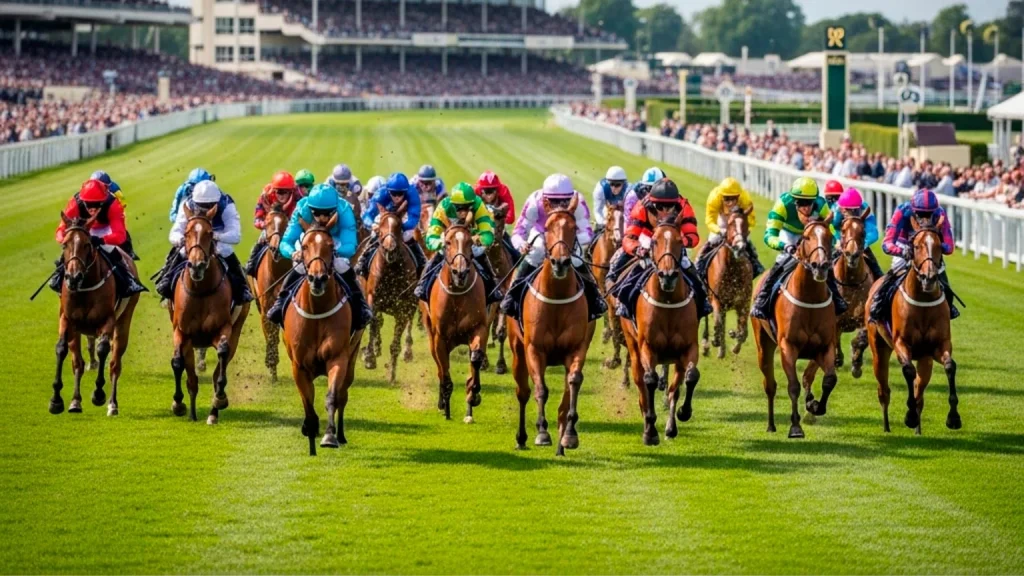
Royal Hunt Cup betting represents the ultimate test of mile handicap mastery at Royal Ascot. Run on Wednesday of the meeting over the straight mile, this heritage handicap attracts fields of thirty runners or more, creating a cavalry charge that rewards shrewd analysis and punishes blind hope. The race has been contested since 1843, earning its place among the most prestigious handicaps on the British racing calendar, and the quality of its fields reflects that status.
Betting on the Royal Hunt Cup demands a different approach from Group race analysis. With so many runners carrying broadly similar chances, the market spreads thinly across the field. Identifying genuine contenders from hopeful entries becomes paramount. Draw, pace, and current form intersect in ways that smaller-field races do not replicate. This guide examines the race’s profile, the draw considerations unique to Ascot’s straight mile, pace dynamics in large fields, and practical strategies for finding value in one of Royal Ascot’s most competitive events.
Royal Hunt Cup Betting — More on this topic at ascot betting tips.
Race Profile and Prize Money
The Royal Hunt Cup carries significant prize money, reflecting its importance within the Royal Ascot programme. Ascot’s total prize fund for 2025 reaches a record £17.75 million, with heritage handicaps like the Hunt Cup receiving substantial allocation. This financial reward attracts the best-handicapped milers in training—horses whose connections believe they can compete at the highest level against large fields of quality opposition.
Field sizes typically reach the maximum of thirty runners, with many more balloted out. The sheer scale creates its own dynamic: race positioning matters enormously, interference is common, and horses unable to find racing room may never show their true ability. Trainers target the race specifically, plotting campaigns designed to secure an attractive handicap mark while maintaining enough fitness to compete in June. Identifying which horses arrive at their peak, rather than those who peaked during qualification, separates successful punters from the crowd.
The race’s history includes numerous notable winners who subsequently proved their class at higher levels. Winning the Royal Hunt Cup off a competitive mark demonstrates ability that often translates to Group race success. For bettors, this means recognising horses whose current rating underestimates their ceiling—improvers whose best is yet to come rather than established performers whose marks reflect their limits.
Wednesday’s timing within Royal Ascot week provides context. By the third day, the ground has been tested; patterns emerge about which parts of the track are riding faster or slower. Early-week results inform your analysis: how have horses drawn high or low fared? What pace scenarios have developed? Using this real-time intelligence sharpens your Royal Hunt Cup selections beyond what ante-post assessment alone can provide.
Draw Analysis for the Straight Mile
Draw matters in the Royal Hunt Cup, though perhaps less decisively than in sprint handicaps or on courses with pronounced biases. The straight mile at Ascot runs uphill throughout its final three furlongs, testing stamina regardless of starting position. Horses drawn wide face a longer path if they angle towards the stands’ rail; those drawn low can save ground but risk getting trapped against the rail in a wall of horses.
Since Ascot’s 2006 reconstruction, the bias towards low draws that previously characterised the straight course has been significantly neutralised. Modern drainage ensures the ground rides more consistently across the track width, reducing the advantage that inside runners once enjoyed. This does not mean the draw is irrelevant—merely that extreme bias is unlikely unless weather creates unusual conditions.
Ground conditions interact with draw more meaningfully than stall numbers alone. When soft ground prevails, the stands’ rail often rides marginally better as it drains more effectively. When conditions are firm, the centre of the course—less trafficked throughout the meeting—can offer fresher ground. Observing how earlier races on the card unfold helps identify whether a bias exists on the day. If horses drawn low dominate the early races, favour similar draws in the Hunt Cup; if high draws have prospered, adjust accordingly.
Large-field dynamics complicate draw assessment. With thirty runners breaking simultaneously, horses do not simply race in their drawn positions. Jockeys angle across, seeking favourable ground or tracking specific rivals. A horse drawn wide with natural early speed might cross to the rail within the first furlong; one drawn low but slowly away could find itself racing wide regardless. The draw influences probabilities rather than determining outcomes; blend it with pace analysis rather than treating it as decisive.
Pace Dynamics in Thirty-Runner Fields
Pace analysis becomes simultaneously more important and more complex in fields exceeding twenty-five runners. Multiple horses will show early speed, often creating a genuine gallop that stretches the field. Unlike small-field Group races where one or two pace setters dictate tempo, the Hunt Cup typically features six or more horses disputing the early lead. This pace pressure benefits horses who can settle and come from behind.
Hold-up horses have historically performed well in the Royal Hunt Cup precisely because the pace tends to be honest. Front-runners exhaust themselves battling for position while closers conserve energy for the final push up the Ascot hill. The challenge for hold-up horses is finding racing room: in a wall of thirty horses, getting a clear run in the final two furlongs requires either luck or a jockey skilled at threading through gaps. Back horses whose riders have experience navigating big-field handicaps.
Pace collapse remains possible despite the number of pace setters. If early speed horses are drawn on opposite flanks and choose not to contest the lead aggressively, the race can turn tactical. This scenario—less common but not rare—favours prominent racers who can dictate from the front when others decline the role. Identifying whether confirmed front-runners are declared, and where they are drawn relative to each other, helps predict which scenario is likelier.
Sectional times from trial races inform pace expectations. Horses who have shown they can sustain effort through genuinely run miles arrive better prepared than those whose wins came in slowly run races. Check the conditions of previous victories: was the gallop strong throughout, or did the race develop into a sprint finish after a tactical early pace? Horses suited by a true test of mile stamina typically handle the Royal Hunt Cup dynamics best.
Historical Trends and Trainer Patterns
Analysing recent Royal Hunt Cup winners reveals patterns worth noting. Weight carried correlates with success: top weights rarely win, despite often being the most talented horses in the field. The burden of eleven stone or more proves difficult to overcome in competitive handicaps run at a genuine pace. Middle-weight horses—carrying between nine stone and ten stone—have better records, suggesting the value lies in backing well-handicapped runners rather than class acts burdened by their ratings.
Age profiles favour younger horses. Four-year-olds have won more often than their older rivals, benefiting from the natural improvement that comes with maturity while avoiding the staleness that sometimes affects seasoned campaigners. Five-year-olds remain competitive, but horses aged six or older rarely trouble the judge. Youth brings freshness and the potential for further improvement—both valuable attributes in a race demanding peak fitness.
Certain trainers consistently target the Royal Hunt Cup with suitable types. Studying which yards have won or placed multiple horses reveals approaches worth respecting. Some trainers specialise in producing handicappers at their peak for big-field summer races; others rarely run in such events and lack the pattern recognition that success requires. Recent form from trainers whose horses have contested previous Royal Hunt Cups—even without winning—suggests familiarity with the challenge.
Irish raiders merit particular attention. Horses trained in Ireland sometimes arrive off marks that underestimate their ability, either because their home form has not been fully assessed by British handicappers or because they have improved since their last rating review. Check whether Irish entries have credible form lines and whether their trainers have previously raided British heritage handicaps successfully.
Betting Approach
Each-way betting suits the Royal Hunt Cup’s structure. With thirty runners and typically six or seven places paid, the probability of hitting the frame exceeds that of winning outright. Target horses at 12/1 or longer whose form suggests they can place even if winning requires everything to fall perfectly. The each-way approach hedges against the race’s inherent unpredictability while capturing value from horses the market underestimates.
See also Wokingham Stakes Betting.
Multiple selections make sense when conviction spreads across several runners. Rather than betting significant stakes on a single selection, consider backing two or three horses at prices where any one placing returns a profit. This approach acknowledges the race’s competitiveness while maintaining exposure to upside. Size stakes to ensure sustainability: the Royal Hunt Cup should enhance your Royal Ascot experience, not jeopardise your week’s betting.
Watch the market for late support. Professional money often arrives in the final hours before racing, shortening prices on horses whose chance has been quietly fancied by those with inside knowledge. Significant market moves—particularly on horses from major yards—deserve respect. Conversely, horses drifting in price from morning to afternoon may be revealing problems not visible in the form: setbacks in training, doubts about ground suitability, or connections hedging their own uncertainty.
