
Ascot Going Conditions: How Ground Affects Results
Best Horse Racing Betting Sites – Bet on Horse Racing in 2026
Loading...
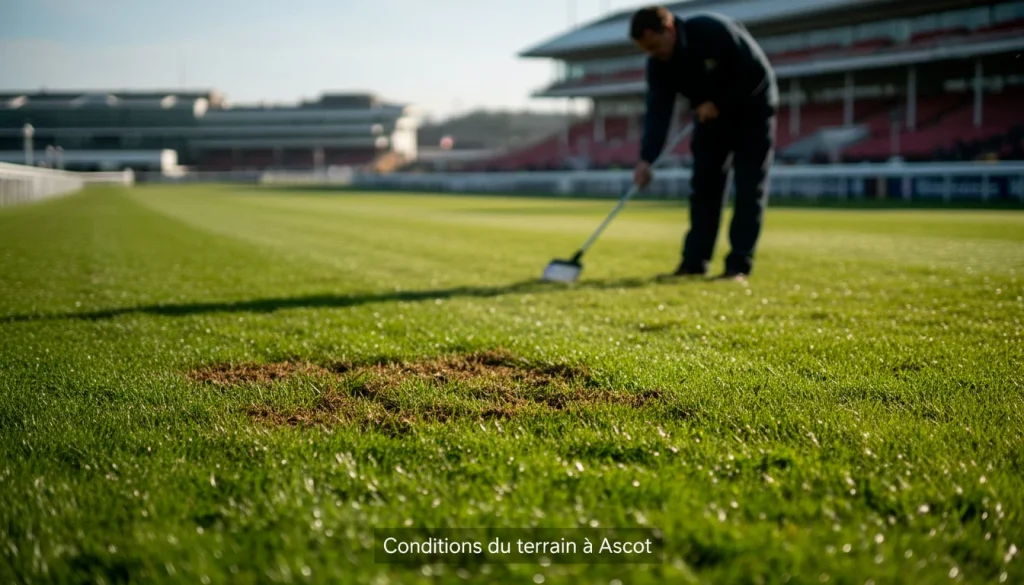
Ascot going conditions shape every race run on this prestigious course, yet many bettors treat ground reports as an afterthought. The state of the turf—whether firm-hard after a dry spell or yielding after persistent rain—directly determines which horses thrive and which ones struggle. A proven performer on fast ground may become a plodding also-ran when the heavens open, while a supposed no-hoper can transform into a winning machine when conditions suit.
Ground-conscious betting starts with understanding that horses are not universally adaptable. Some have the knee action to handle soft ground, cutting through heavy turf with power and determination. Others possess the lighter, quicker movement that suits firm going, where speed over stamina becomes the deciding factor. At Ascot, these distinctions matter enormously because the track’s unique characteristics—its undulations, the famous camber on the round course, the straight mile’s distinct challenges—interact with ground conditions in specific ways that reward bettors who pay attention.
This guide breaks down how Ascot measures and reports going, what the track’s modern drainage system means for race conditions, and how to read form with ground preferences in mind. Whether you are analysing ante-post markets months before Royal Ascot or making final decisions on race day, understanding going conditions gives you an edge that most casual bettors simply ignore.
The Going Scale: From Firm to Heavy
British racing uses a standardised scale to describe ground conditions, running from Firm at the fastest extreme to Heavy at the slowest. Between these poles lie Good to Firm, Good, Good to Soft, Soft, and Soft to Heavy. Each increment represents a meaningful change in how the turf rides, affecting stride lengths, energy expenditure, and the tactics that jockeys employ.
Firm ground suits horses with a quick, economical action. They skim across the surface without wasting energy, their hooves barely marking the turf. These conditions favour speed and often produce faster times, though they also increase concussion through legs and joints—one reason trainers become cautious about running certain horses when the ground dries out excessively. Good to Firm represents the default for quality flat racing: fast enough to encourage genuine galloping, yet forgiving enough to protect the horses.
Good ground sits in the middle of the spectrum and theoretically suits most horses. In practice, though, the description covers a range of conditions. Going reported as Good on one course might ride differently on another, which is why experienced bettors always consider recent results and times alongside the official going report.
Good to Soft and Soft conditions slow the pace and demand more stamina. Horses with a round, knee-lifting action tend to handle these conditions best, their powerful movement cutting through the yielding surface rather than fighting it. Heavy ground takes this further, turning races into genuine tests of stamina and determination. Some horses simply cannot act in the mud, while others seem to relish it. The official going report comes from measurements taken using a GoingStick—a device that penetrates the turf to measure resistance—along with visual inspection and, increasingly, input from jockeys who have ridden the track that day. Ascot’s clerk of the course typically provides updates on the morning of racing and again if conditions change.
Ascot’s Drainage Advantage
The £220 million reconstruction completed in 2006 transformed Ascot into one of the best-draining tracks in Britain. Engineers installed a sophisticated drainage system beneath both the straight and round courses, enabling the ground to recover from rainfall far more quickly than at most other venues. This matters for bettors because it means going conditions at Ascot tend to be more consistent during a meeting and less prone to the dramatic changes that can occur elsewhere.
Before the rebuild, Ascot could become genuinely testing after sustained rain, with soft patches developing in predictable areas that savvy bettors could exploit. The modern track minimises these inconsistencies. When rain falls, it drains away relatively quickly, and the going typically improves faster than forecast. This has practical implications: if morning rain threatens to turn Good to Soft, there is a reasonable chance that conditions will ride closer to Good by the feature races in the afternoon.
The drainage also affects draw bias, which at Ascot has been largely neutralised since the 2006 reconstruction. On less well-drained courses, horses drawn on the stands’ side or far side might face different conditions, with one rail becoming significantly softer than the other. At Ascot, the uniformity of the drainage means both rails tend to ride similarly, reducing the advantage that certain draw positions might otherwise confer. This does not eliminate draw considerations entirely—distance and field size still matter—but it does mean that ground-related draw biases are less pronounced than at venues like Chester or Beverley.
The 2006 reconstruction significantly neutralised the low-draw bias that previously characterised Ascot’s sprint races. Understanding this engineering reality helps bettors avoid over-adjusting for historical draw trends that no longer apply with the same force.
Reading Form for Ground Preferences
Identifying a horse’s ground preference requires detective work rather than guesswork. The most obvious indicator is previous form: how has the horse performed on different going? Racecard comments and form guides typically include ground conditions for each run, allowing you to spot patterns. A horse that has won on Good to Soft and Soft but finished down the field on Good to Firm probably needs some cut in the ground. Conversely, a horse whose best efforts come on fast ground may struggle when conditions turn testing.
Pedigree offers additional clues, though it should be used cautiously. Certain sire lines are associated with handling soft ground—Sadler’s Wells descendants, for instance, often act well with cut—while others produce speedier types better suited to firm. These are tendencies rather than rules. An individual horse might defy its breeding, which is why actual race performance always trumps pedigree assumptions.
Physical conformation matters too, though it is harder for most bettors to assess from a distance. Horses with a round, powerful action tend to handle soft ground better than those with a flatter, speedier stride. Watch replays of horses you are considering backing: how do they move? Do they pick their feet up or skim across the surface? Trainers who know their horses’ preferences often telegraph them through declarations. A trainer repeatedly entering a horse on days when soft ground is expected, then withdrawing when conditions dry out, is telling you something valuable.
The quality of opposition also intersects with going. The BHA’s 2024 Racing Report shows that the number of Flat horses rated 85 or higher grew by 3.5 percent, from 1,983 to 2,052. This increase in quality depth means that conditions which inconvenience even one or two leading contenders can significantly reshape race dynamics. A well-handicapped horse that handles soft ground becomes more valuable when its main rivals do not.
Weather Forecasting and Betting Timing
Weather forecasting has become an essential tool for serious bettors. The Met Office, BBC Weather, and various specialist services provide detailed hourly forecasts for Ascot and surrounding areas. Cross-referencing multiple sources reduces the risk of being caught out by one service’s optimistic or pessimistic prediction.
The key question is not just whether it will rain but when and how much. A few millimetres overnight might move Good ground to Good to Soft, while sustained rain through the afternoon could push conditions towards Soft. Equally important is the forecast for the days leading up to a meeting. Ground staff can water the course to achieve desired conditions, but they cannot control the skies. A dry week before Royal Ascot might produce faster ground than trainers anticipated when making entries, leading to late withdrawals that reshape fields.
Betting timing becomes crucial when weather is uncertain. If you believe a horse will benefit from soft ground and forecasts suggest rain, there may be value in backing it ante-post before the market adjusts. Conversely, if drying conditions are expected, horses known to want fast ground might shorten in price as race day approaches. The market is not always efficient at pricing in weather changes, especially several days out.
Monitor the official going updates from Ascot, which appear on the racecourse website and through racing media. The clerk of the course often provides commentary on likely changes, giving you an informed view of whether morning conditions will persist or evolve. Some bettors wait until the first race has been run to see how the times compare with historical data, using this as a real-world check on official going descriptions. By combining forecasts, official updates, and early race evidence, you can make better-informed decisions about which horses the conditions will favour.