
Live Betting at Ascot: In-Play Strategies
Best Horse Racing Betting Sites – Bet on Horse Racing in 2026
Loading...
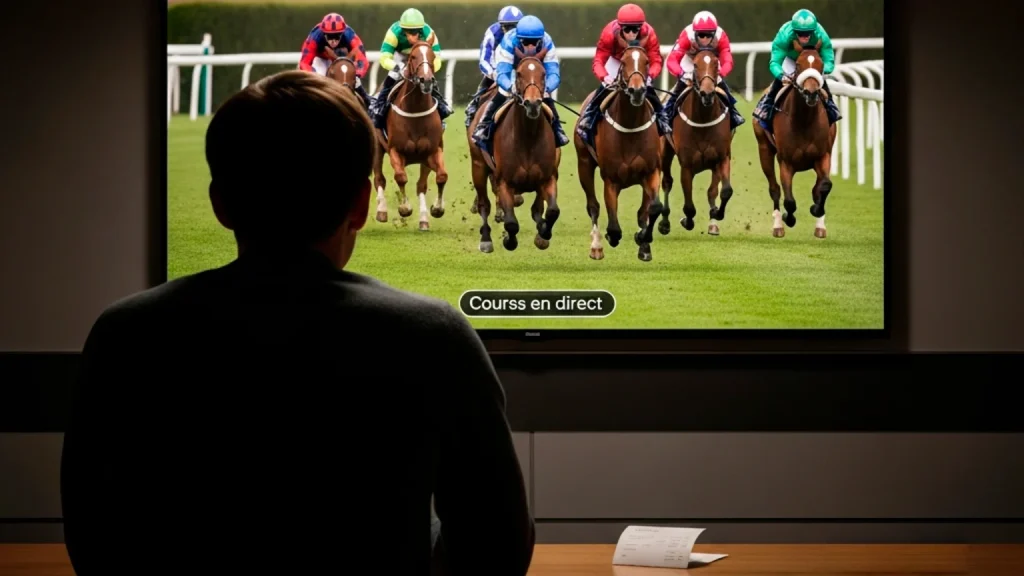
Live betting at Ascot opens a dynamic dimension to horse racing punting that traditional pre-race markets cannot match. While most bettors finalise their selections before the stalls open, in-play markets allow you to react to what is actually happening: the pace scenario unfolding, how your selection is travelling, and whether the market has correctly assessed the race’s shape. This responsive approach requires different skills than form study—speed of thought, visual acuity, and the discipline to act decisively when opportunities arise.
In-play betting on horse racing differs fundamentally from in-play football or tennis. Races unfold in minutes rather than hours, leaving limited time for considered decisions. Market suspensions occur during critical moments. Yet for bettors who understand these constraints, live markets offer unique opportunities: backing horses whose position has improved, laying favourites who are struggling, or trading out of positions when circumstances change. This guide explains how in-play markets function, where to access live coverage, and the strategies that translate real-time observation into betting edge.
How In-Play Markets Function
In-play betting markets operate on betting exchanges like Betfair and Betdaq, where punters bet against each other rather than against a bookmaker. Prices move continuously based on supply and demand, responding in real time to developments on the track. A horse that stumbles at the start will see its price lengthen instantly; one that travels smoothly in a prominent position will shorten. These price movements reflect the collective assessment of thousands of bettors watching the same race.
Market suspensions distinguish horse racing in-play from other sports. During the critical final stages of a race—typically the last two furlongs—exchanges suspend betting entirely. This prevents exploitation of the split-second gap between what happens on track and when prices update. You cannot back a horse as it passes the post; you must anticipate outcomes before the suspension kicks in. Understanding when suspensions occur helps you time your bets appropriately.
The global scale of in-play betting underscores its significance. According to IBIA and H2GC research, approximately 47 percent of all sports bets globally are placed in-play. While this figure encompasses all sports, it demonstrates that live betting is not a niche activity—it represents nearly half of total betting volume. For horse racing specifically, the figure is lower due to the short duration of events, but the principle remains: significant money changes hands during races, not just before them.
Traditional bookmakers also offer in-play betting on racing, though with different mechanics. Rather than fluctuating exchange prices, bookmakers display fixed odds that they adjust periodically. The delays between price changes create occasional value when reality has moved faster than the bookmaker’s feed. However, liquidity and speed favour the exchanges for serious in-play traders. Most recreational bettors find bookmaker in-play markets sufficient for occasional use, while dedicated traders gravitate to exchanges where the action is deeper and faster.
Accessing Live Coverage
Effective in-play betting requires watching races in real time, not waiting for results to appear on a screen. Several options exist for accessing live coverage of Ascot races, each with its advantages and limitations. Your choice depends on where you are betting, what devices you have available, and whether you are willing to pay for premium services.
ITV Racing broadcasts many of Ascot’s biggest meetings on free-to-air television, including Royal Ascot, the King George, and British Champions Day. The coverage is comprehensive and professionally produced, with excellent camera work and informative commentary. For bettors in the UK, ITV provides the easiest access to live racing—no subscriptions, no betting requirements, just standard television. The delay between action and broadcast is minimal, typically under a second.
Bookmaker streaming services offer an alternative for those without television access. Most major operators—bet365, Sky Bet, William Hill, Paddy Power—stream racing directly through their websites and apps. The catch: you must have either a funded account or a bet placed on the race to unlock the stream. Quality varies by operator, and streams can lag behind real-time action by several seconds. This delay matters for serious in-play trading but is usually acceptable for recreational punters making occasional live bets.
Racing TV and Sky Sports Racing provide dedicated channels for those willing to subscribe. These services cover virtually all British racing, including the less glamorous midweek fixtures that free broadcasts skip. The picture quality and coverage depth exceed free alternatives, making subscriptions worthwhile for committed punters who bet regularly across the calendar. Many bookmakers offer Racing TV access as a perk for active customers, reducing the effective cost.
At the track itself, screens throughout the grandstand show races in progress. Betting in-play while attending Ascot combines the atmosphere of live racing with the ability to observe horses in the paddock and at the start before making decisions. Wi-Fi and mobile signal strength at Ascot are generally reliable, allowing you to place bets through apps while watching the action unfold in front of you.
Strategies for In-Play Success
The most reliable in-play edge comes from reading pace scenarios as they develop. Races do not always unfold as expected: sometimes confirmed front-runners miss the break, or a hold-up horse gets further back than intended. These early developments reshape the race’s dynamics in ways the market does not always price immediately. A horse that should be leading but finds itself three lengths behind might drift dramatically—even if the overall situation remains recoverable.
Understanding how pace affects outcomes provides context for these assessments. Research from BHA handicappers, cited by lightspeedstats, suggests that approximately 40 percent of results appearing to defy form can be explained through pace analysis. In-play markets give you real-time information about pace: Is the early tempo genuine or steady? Are front-runners being pressured or allowed an easy lead? If the pace is slow when you expected fast, closers become less attractive; if the pace is honest, hold-up horses grow in value. Translating these observations into betting decisions requires practice, but the edge is real.
Nick Smith, Ascot’s Director of Racing, has emphasised the importance of field quality in modern racing markets. Speaking about the track’s initiatives to boost participation, he noted: “Field sizes are very important, especially in the World Pool era, and we hope that connections of horses that aren’t at the top of the betting might see this as a good reason to go for the big target.” His remarks, shared through TRC’s coverage, highlight how competitive fields create more dynamic races—and more in-play opportunities. When fields are deep, unexpected scenarios arise more frequently, generating the price dislocations that in-play bettors exploit.
Trading positions rather than betting to win represents another in-play approach. Suppose you backed a horse ante-post at 10/1 and it has shortened to 6/1 by race time. You could lay it on the exchange at the shorter price, locking in profit regardless of outcome. In-play markets extend this logic: if your horse travels well into the straight and shortens further, you can lay at even shorter prices—or wait for the outcome. Managing positions dynamically turns binary win/lose bets into more nuanced trading exercises.
Cash Out Decisions
Cash out features allow you to close bets before races conclude, taking a guaranteed return rather than waiting for the final result. Bookmakers calculate cash out values based on current market prices, offering you less than full winnings if your selection is leading or some return if it is struggling. The convenience comes at a cost: cash out values incorporate the bookmaker’s margin, meaning you systematically receive worse terms than trading manually on an exchange.
When cash out makes sense depends on circumstances. If your selection has encountered trouble—interference, poor ground, a bad jump start—and you doubt its ability to recover, cashing out preserves some return rather than losing entirely. If you have backed a horse that has built an insurmountable lead, cashing out for guaranteed profit might suit risk-averse bettors even though waiting for the result would pay more. The decision is personal: how much do you value certainty over expected value?
Partial cash out offers a middle path. Rather than closing your entire position, you cash out a portion while leaving the rest to run. This locks in some profit while maintaining exposure to larger returns if your selection wins. For example, if you stand to win one hundred pounds, you might cash out fifty and let the remaining fifty ride. You have guaranteed profit and retained upside—a balanced approach that suits many bettors.
The discipline not to cash out matters as much as knowing when to do so. Bookmakers profit when customers cash out too readily, accepting poor value in exchange for emotional relief. If your analysis was sound when you placed the bet, events unfolding as expected should not trigger an exit. Reserve cash out for situations where material information has changed—not simply because nerves are jangling as the race reaches its climax. Over time, disciplined bettors who avoid unnecessary cash outs outperform those who succumb to anxiety at critical moments.