
Pace Maps Ascot: Predicting Race Tempo
Best Horse Racing Betting Sites – Bet on Horse Racing in 2026
Loading...
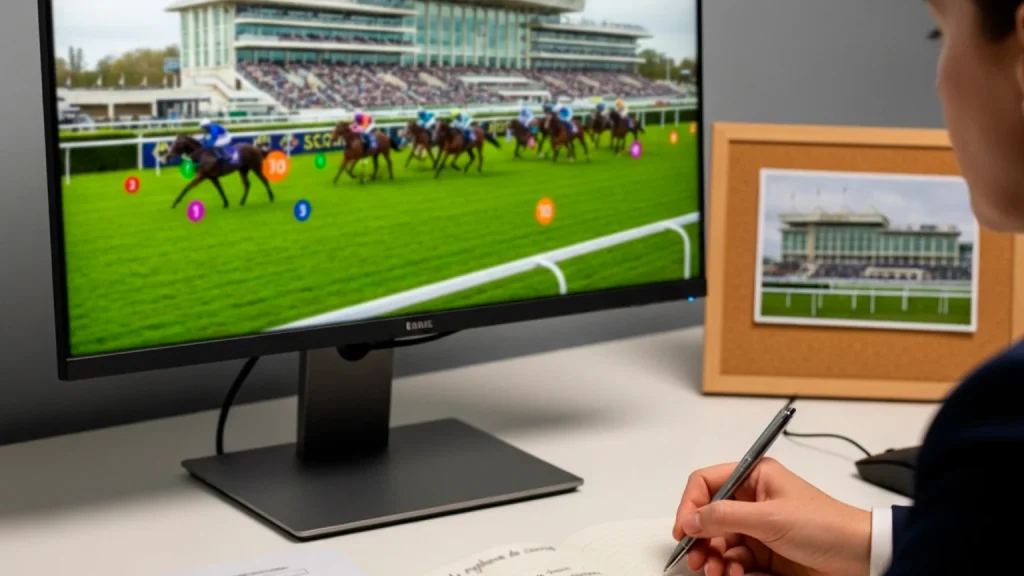
Pace maps at Ascot offer bettors a structured way to predict how races will unfold before the stalls open. While most punters fixate on form figures and trainer statistics, the tempo of a race—who leads, who tracks, who waits—often determines the outcome more directly than any other factor. A horse with brilliant recent form can finish nowhere if the pace collapses and leaves it flat-footed, while a moderate performer can outrun expectations when a strong gallop plays to its strengths.
Understanding pace requires looking beyond individual horses to see the race as a whole. Every contest has a shape: some develop into end-to-end gallops that favour closers, others turn into tactical crawls where early speed proves decisive. At Ascot, the track’s unique layout—its uphill finishes, the distinct characteristics of the straight and round courses—interacts with pace scenarios in predictable ways. Learning to map these scenarios before betting transforms guesswork into analysis, giving you an edge that casual punters simply do not possess.
What Is Pace Mapping
Pace mapping means identifying each horse’s likely running style and predicting how those styles will combine to create the race’s overall tempo. The goal is not to forecast exactly where every horse will be positioned at every point, but to answer a simpler question: will this race be run at a true gallop, a moderate pace, or a tactical crawl? That single assessment often determines which types of horses benefit.
The starting point is categorising each runner’s typical racing style. Some horses are confirmed front-runners who need to lead or race prominently to show their best. Others are stalkers who prefer to sit just behind the pace. Hold-up horses need a strong gallop to run into, relying on their finishing kick to overhaul tiring rivals in the closing stages. Identifying where each runner in a race falls on this spectrum allows you to predict how the early exchanges will play out.
According to research citing BHA handicappers, approximately 40 percent of results that appear to contradict a horse’s form can be explained through pace analysis. That figure alone justifies the effort of building pace maps: nearly half of the races where form lets you down could have been anticipated by reading the likely tempo correctly. For bettors willing to invest the time, pace mapping represents one of the most underexploited edges available.
Building a pace map requires consulting recent race replays, not just form figures. A horse described as a “prominent racer” in comments might actually have led last time only because nothing else wanted to. Watching how horses travel through their races reveals their genuine preferences. Once you have classified each runner, you can predict whether the race will feature multiple confirmed front-runners battling for the lead—creating a strong pace that suits closers—or a field of hold-up horses where nobody wants to make the running, producing a tactical race that favours speed.
Running Styles Explained
Running styles fall into four broad categories, though individual horses can show flexibility depending on circumstances. Front-runners want to lead from the stalls, setting their own tempo and trying to build an unassailable advantage. These horses often struggle when denied the lead or when challenged aggressively in the early stages. At Ascot, where the finishes test stamina, front-runners need to judge the pace carefully to avoid emptying their tanks before the climb to the line.
Prominent racers prefer to sit just behind the leaders, typically within a length or two of the front. They travel within themselves while keeping the leaders in their sights, ready to pounce when the tempo slows or rivals tire. This is often the optimal position at Ascot: close enough to capitalise on any pace collapse, far enough back to conserve energy for the finish. Jockeys with good tactical awareness excel at placing horses prominently without committing too early.
Mid-division runners occupy the middle of the pack, often through necessity rather than preference. In large fields, not every horse can race prominently, and some find themselves trapped in traffic. For handicaps at Ascot—where fields can exceed twenty runners—mid-division position often depends as much on the draw and early speed as on the horse’s natural style. Assessing whether a mid-division runner can find racing room becomes part of the pace-mapping exercise.
Hold-up horses come from behind, relying on a strong finishing kick to overhaul rivals in the closing stages. These horses need a genuine pace to run into; without it, they struggle to close the gap on leaders who have conserved energy through a slow early tempo. At Ascot, the uphill finish provides hold-up horses with a natural advantage when the pace has been honest, as front-runners often tire in the final furlong. However, in slowly run races, hold-up horses can find themselves with too much ground to make up regardless of their finishing speed.
Identifying a horse’s true running style requires watching multiple races, not just reading comments. Some horses lead only when nothing else shows early speed; others are held up by jockeys tactically even though they possess natural speed. Replays reveal the truth: how does the horse travel through the race? Does it pull against restraint, suggesting it wants to go forward? Does it relax kindly, suggesting it can be placed anywhere? These observations inform your pace map more reliably than any written summary.
Sectional Times in UK Racing
Sectional times measure how fast horses cover individual portions of a race, typically in furlong increments. In jurisdictions like the United States, sectionals have been standard for decades, but British racing has been slower to adopt them universally. The technology now exists at most major tracks, including Ascot, to record sectional data, though public availability and quality vary.
The value of sectional times lies in their ability to reveal pace scenarios objectively. If the first three furlongs of a six-furlong sprint were covered in exceptionally fast time, you know the pace was genuine regardless of how the race looked visually. Conversely, slow early sectionals confirm that front-runners had an easier time than usual. This data helps explain unexpected results and predict how horses might perform under different pace conditions.
Comparative analysis across different tracks highlights how course configuration affects pace dynamics. Analysis of Chester, for example, shows that front-runners drawn in stalls one to three win approximately 35 percent of sprint races—a stark advantage created by the track’s tight turns and the importance of early position. Ascot’s straight course offers no such advantage, but understanding how sectional times vary between the straight and round courses helps calibrate expectations.
For bettors, sectional times serve two purposes. First, they validate or challenge your visual assessment of a race. You might believe a horse ran well despite finishing mid-pack, but sectionals can confirm whether it actually accelerated through the finish or merely maintained pace while others slowed. Second, sectionals from previous races help predict running styles: a horse that consistently records fast early sectionals but slows late is a confirmed front-runner whose stamina is questionable over further trips or on demanding tracks like Ascot.
Accessing sectional data requires some effort. Racing Post provides sectionals for selected races, while specialist services like Timeform and Racing TV offer more comprehensive coverage. Ascot itself has invested in timing technology, and sectionals are increasingly available for feature races. The data may seem intimidating at first, but the basic insight is simple: fast early, slow late suggests a muddling pace that should have favoured speed; slow early, fast late suggests a truly run race that suited closers.
Applying Pace Analysis to Ascot
Ascot’s configuration makes pace analysis particularly valuable. The straight course—used for sprint and mile races—runs uphill throughout the final three furlongs, creating a natural advantage for horses who conserve energy early. On this course, honestly run races typically favour closers because front-runners must sustain their effort up an increasingly demanding gradient. Tactical races, however, can allow speed horses to steal the race from the front if nothing challenges them.
On the round course, used for races beyond a mile, the layout introduces additional variables. Horses negotiate bends before entering the home straight, and positional advantage going into the turns can matter more than in straight-course races. Pace scenarios still apply: a strong early gallop tires leaders, while a tactical race rewards those who raced prominently. But the ability to travel efficiently around the bends adds another dimension to assessment.
Building a pace map for an Ascot race follows a consistent process. First, identify every runner’s typical style from replay analysis. Second, count the confirmed front-runners and prominent racers. If two or more horses need to lead, expect a contested pace that will benefit closers. If only one horse shows early speed, expect a slower tempo that might allow it to dictate from the front. Third, consider the draw: on the straight course, horses drawn wide may need to use extra energy to find position, subtly affecting the pace dynamics.
The most profitable opportunities arise when your pace assessment contradicts the market’s apparent assumptions. If a hold-up horse is favourite in a race where no confirmed front-runners are declared, question whether the pace will materialise to suit it. Conversely, if a front-runner is dismissed at long odds in a race where nothing else shows early speed, consider whether it might control the race unopposed. These scenarios occur more often than most bettors recognise, and pace mapping helps you identify them before the market corrects.
Combining pace analysis with draw studies further refines your edge. If two front-runners are drawn on opposite sides of the track for a straight-course sprint, they may not contest the lead as aggressively as if they were drawn adjacent. Understanding how the draw affects pace dynamics—particularly in large-field handicaps—adds nuance to your predictions. The goal is always the same: anticipate the race shape before it unfolds and back horses whose styles match that shape.