
St James's Palace Stakes Betting Guide
Best Horse Racing Betting Sites – Bet on Horse Racing in 2026
Loading...
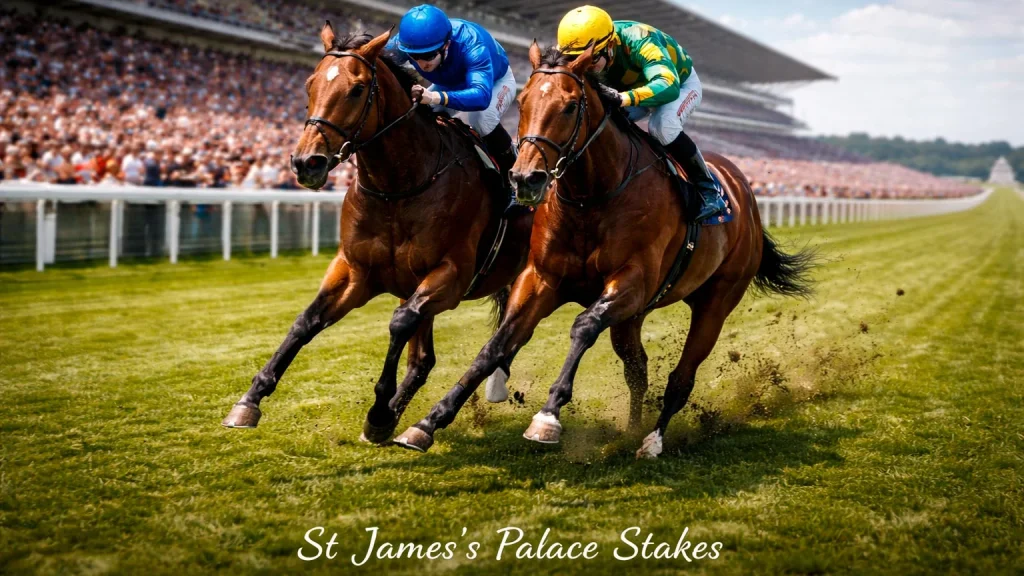
St James’s Palace Stakes betting determines the three-year-old mile championship on the opening Tuesday of Royal Ascot. This Group 1 contest attracts winners and placed horses from the spring Guineas trials—the 2000 Guineas at Newmarket, Irish 2000 Guineas at the Curragh, and their French equivalent at Longchamp. For bettors, the race offers an opportunity to assess how mile championship form translates from Classic venues to Ascot’s demanding straight course, where tactical nous and finishing stamina matter as much as raw ability.
The race’s prestige ensures competitive fields featuring the season’s best Classic milers. These are horses whose connections have invested in campaigns targeting this moment—runners prepared specifically to peak at Royal Ascot rather than rest on Guineas laurels. Identifying which horses have continued to progress since their Classic runs, which have maintained fitness without staleness, and which might struggle with Ascot’s unique configuration shapes intelligent selection.
Race Significance and O’Brien’s Record
The St James’s Palace Stakes ranks among the most prestigious three-year-old races in Europe, its winner anointed as the generation’s leading miler. Victory here often precedes campaigns targeting the Sussex Stakes, Queen Elizabeth II Stakes, and international targets. The race establishes pecking orders that persist throughout the season, making it both a betting proposition and a form reference for subsequent analysis.
Aidan O’Brien’s dominance in the St James’s Palace mirrors his broader Royal Ascot success. According to bet365’s historical records, O’Brien has won this race nine times—a remarkable strike rate reflecting Ballydoyle’s ability to produce top-class milers year after year. His runners typically arrive with strong Guineas form, proven ability at the highest level, and the experience that comes from contesting multiple Group 1 races before Ascot.
Multiple Ballydoyle entries require careful assessment. O’Brien often runs two or three horses in the St James’s Palace, creating both complications and opportunities. Ryan Moore’s mount usually represents the stable’s first string, but occasionally a secondary runner outperforms expectations. Study the relative form of Ballydoyle entries: a horse that finished ahead of its stablemate in the Guineas should maintain that superiority unless specific circumstances suggest reversal.
Opposing O’Brien requires identifying weaknesses in his representation or exceptional qualities in alternatives. Irish Guineas form provides useful context—if an O’Brien runner failed to beat a rival that subsequently disappointed, confidence might waver. Conversely, if Ballydoyle’s best has been beaten fair and square by a rival who reappears here, the form favours the winner regardless of stable reputation.
Classic Form Analysis
Guineas form provides the primary evidence for St James’s Palace assessment. The 2000 Guineas winner typically starts favourite here, carrying the prestige of Classic success. Yet Guineas winners do not always reproduce that form at Ascot: different ground, a different track configuration, and additional racing since Newmarket all create potential for form reversals. The question is whether conditions at Ascot favour or hinder the Newmarket form choice.
O’Brien’s extraordinary record at Royal Ascot provides context for any Classic form analysis. With 91 Royal Ascot victories across all races, O’Brien understands how to prepare horses for this meeting. His runners rarely underperform relative to expectations; when they lose, it is usually because opponents were genuinely better rather than because Ballydoyle horses failed to deliver. Respect this pattern when assessing beaten Ballydoyle runners from the Guineas—they typically maintain their form.
Irish and French Guineas winners bring different form profiles. The Curragh’s flat, galloping track differs markedly from Ascot’s undulating configuration with its stiff uphill finish; horses making that transition face adjustment challenges. French form requires translation for going conditions and track demands. Neither Irish nor French form is inferior to British—simply different. Weight the evidence appropriately: a horse that won convincingly in Ireland might be better than one that scraped home at Newmarket, despite the latter’s superior historical prestige.
Beaten horses from the Guineas often represent value. Not every race produces a worthy winner; sometimes Classic form compressed artificially by circumstances that Royal Ascot might reverse. A horse that finished second or third in the 2000 Guineas, beaten by a margin that could be attributed to pace, ground, or draw, might outperform that rival when conditions differ. Look beyond raw finishing positions to assess quality of effort, then determine whether Ascot’s conditions favour reversals.
Pace and Tactical Considerations
Ascot’s straight mile demands tactical intelligence alongside raw ability. The course runs uphill throughout its final three furlongs, creating a stamina test that exposes horses who have used too much energy too early. Races often develop tactically, with jockeys content to track a moderate pace before quickening for home. Understanding which horses handle these scenarios—and which need genuine gallops to show their best—shapes selection.
Small fields in the St James’s Palace reduce pace certainty. Unlike heritage handicaps where multiple runners ensure honest gallops, Group 1 milers often proceed cautiously until the final quarter mile. This tactical orientation favours horses who possess natural speed alongside stamina—those who can quicken from moderate paces and sustain their effort up the hill. Hold-up horses who need strong gallops to run into can struggle when the pace fails to materialise.
Front-runners face dilemmas in tactical races. Setting honest fractions invites rivals to track you, conserving energy for a finishing kick; going too slowly allows speedier types to dominate the finish from the front. Jockeys with experience navigating these challenges—reading the race, judging pace, making decisive moves at the right moment—add value that basic form figures cannot capture. Note which runners have jockeys renowned for tactical acumen at Ascot.
Ground conditions interact with tactics. Soft ground slows the pace naturally, making late surges harder to execute; fast ground allows tactical races to develop into sprints where pure speed prevails. Weather forecasts and going updates closer to race day inform tactical expectations. A horse ideally suited to soft-ground gallops might struggle if the ground rides faster than expected; conversely, a speed horse might relish drying conditions.
Betting Angles
Guineas beaten horses at bigger prices often provide value. The market focuses on Classic winners, shortening their prices to levels that offer marginal returns relative to their actual winning probability. Horses that finished within a length or two—close enough to suggest they could reverse the form under different circumstances—frequently start at prices that underestimate their chances. Identifying these value plays requires honest assessment of why they lost and whether Ascot’s conditions address those weaknesses.
Trainer intentions reveal themselves through declarations and jockey bookings. A trainer running multiple horses will assign their best rider to the horse they believe has the strongest chance. Changes from Guineas jockey bookings might indicate shifted confidence; retained bookings confirm continued belief. Watch for trainers who traditionally peak their horses for Royal Ascot rather than the Guineas—their runners might have more to give.
Each-way betting makes less sense in small, competitive Group 1 fields than in handicaps. Place terms paying three positions from eight or nine runners offer modest insurance; the probability of an each-way bet showing profit depends heavily on your selection finishing second or third when unable to win. In races where all runners possess genuine winning credentials, win-only betting often provides better value despite the reduced coverage.
Late market moves merit attention. Information flows into Group 1 markets more efficiently than handicaps, but edges still exist for those watching prices closely. A horse shortening from 7/1 to 4/1 in the final hour reflects serious money from informed sources. These moves do not guarantee winners, but they indicate that those closest to the horses rate their chances highly. Balance market intelligence against your own analysis rather than abandoning considered opinion for market momentum.